
Tag Archives: Bram Stoker

Saturday is Horror Day #218 – Nosferatu the Vampyre (1979)

Reviewer: Julie Lynn Hayes

Nosferatu the Vampyre (1979)

Solicitor Jonathan Harker (Bruno Ganz) is sent by his employer Renfield (Roland Topor) to Transylvania to assist a new client, Count Dracula (Klaus Kinski) in the purchase of a house in Wismar, Germany, where Harker lives with his wife Lucy (Isabelle Adjani). The people in the nearby village warn him not to go there, that there is no castle, and only danger lies there. But he doesn’t listen and, when they refuse to take him there, he walks to the Borgo Pass, where he is met by the Count’s carriage.

The castle is a strange place, and so is the Count. Harker finds it difficult to get him to concentrate on the business at hand. But when he accidentally cuts himself, the Count’s reaction is inexplicable. Harker finally realizes there is something very off about Dracula. Even worse, he is a prisoner in this place – and Dracula is headed toward Wismar – and Lucy.

Meanwhile, Lucy is anxious to learn any news of her husband, who has fallen silent. Her friend Mina (Martje Grohmann) tries to console her, but Lucy is distraught. When a mysterious man appears in her bedroom, the Count, Lucy is both frightened and fascinated. Meanwhile, there seems to be a growing problem with rats in Wismar, and as they spread their plague among the village, the death toll is rising, as Harker races back to save his wife.

I admit I had some high hopes about this version of Nosferatru, and the review I saw was good, but I quickly became disillusioned and almost turned it off, but decided to stick it out in order to give it a fair shot.  That didn’t help. Where to start? The actor playing Renfield was so manic and over the top, that in reality, he would have been locked up well before he was in this film.

Also, I found Isabelle Adjani’s acting to be terrible, and very over the top but not in a good way. I understand she is considered to be a talented actress, but I saw none of that in this film.

The original Nosferatu was an actual rip-off of Bram Stoker’s Dracula (and they did get sued for that). In this version, for some reason, they made some changes to the original story. Lucy is Harker’s wife, instead of Mina. The other suitors, aka Dr Seward and Quincy Morris, are nowhere in evidence. And the rats is simply a twist on Dracula’s ability to control the rats in the scene in Carfax Abbey.

Klaus Kinski’s make-up, as Count Dracula, is clearly modeled after the original Nosferatu, but his mannerism is at times almost simpering. Other than the fact that he drinks blood from his victims, what is scary about him? Nothing. Neither does he possess the sensuality of Bela Lugosi or Gary Oldman.

All in all, I was disappointed in what at first glance appeared to be a pretty film. But alas, I discovered that it lacked the substance I was hoping to find. I’ll give this film 2 Stars.
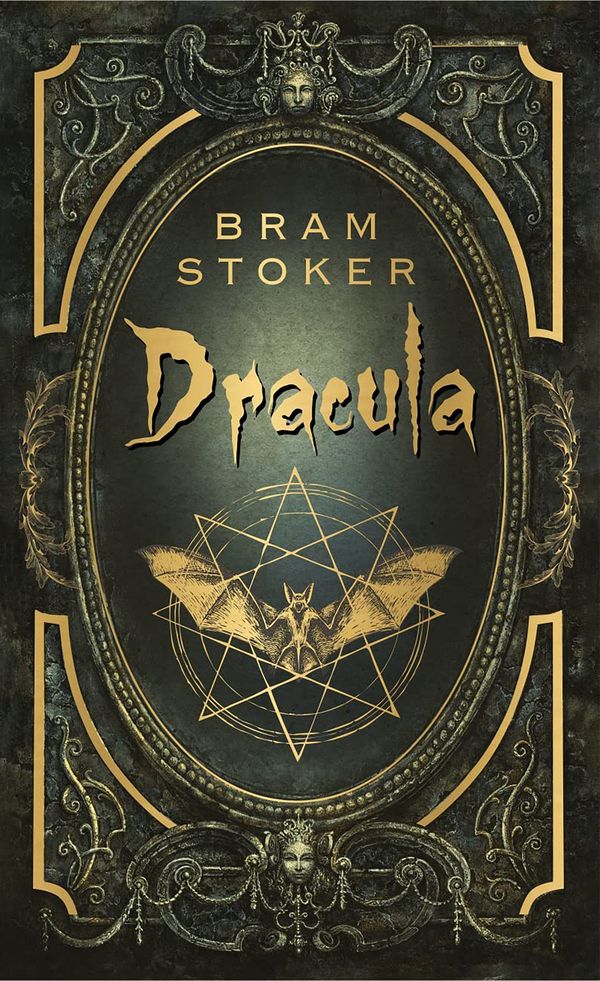
Book Review: Dracula by Bram Stoker

Dracula       

Author: Bram Stoker

Publisher: Fingerprint! Publishing (Deluxe Edition)

American release date: March 1, 2022

Format/Genre/Length: Paperback/Vampire Horror /440 pages

Overall Personal Rating: ★★★★★

Reviewer: Julie Lynn Hayes

Jonathan Harker, a newly qualified solicitor, is sent by his employer, Mr. Hawkins, to assist a foreign customer with the legal intricacies of his move to London. The customer in question, a Count Dracula, lives in faraway Transylvania. Harker keeps a detailed journal of his travels across Europe to meet with his client. When he is almost at his journey’s end, he finds the villagers of Bistritz friendly and welcoming… until they learn where he is going. They are reluctant to see him leave them, but they offer no valid reason as to why he shouldn’t go to the castle, so off he goes. The Count lives in a large, imposing castle that sits in splendid isolation on the top of a rocky cliff. But from the beginning, Harker senses something strange about the place and its odd owner. He sees no sign of anyone else there, not a single servant. And why is the Count always busy during the daylight hours? And why does he never see Dracula eat or drink? And then there are the dreams, of three lovely young women who seem to want him… Things take a turn for the worse when Dracula dictates three letters that Harker must write to his loved ones. Suddenly, he is not so sure he will return home safely…

Mina Murray is Harker’s fiancée. She works as an assistant schoolmistress. Her best friend is Lucy Westenra, a vivacious young woman who attracts any manner of male admirers. In fact, on one memorable day, she receives three proposals of marriage! What is a girl to do? One is from Arthur Holmwood, Lord Godalming. The second is from John Seward, who runs an insane asylum. The third would-be suitor is Quincy Morris, a Texan and friend of Seward and Holmwood.  Mina invites Lucy for a visit, and they happily renew their friendship as they discuss Lucy’s engagement to the suitor she has finally accepted.

Dr. Seward has a very interesting patient by the name of Renfield, whom he classifies as zoophagous, because he likes to eat living things, such as flies and spiders. Seward notices changes taking place in Renfield that he can’t explain, while Mina is concerned that she hasn’t heard from Jonathan for some time, and she worries for him. She receives a letter concerning him and hastens to be by his side.

A strange ship, the Demeter, runs aground just below the cliff where Lucy and Mina are wont to sit, but no one is at the helm and there is no sign of the crew. Lucy has begun to sleepwalk before Mina’s departure, and now she falls mysteriously ill, to the dismay of those who love her. A desperate Dr. Seward reaches out to a colleague in Amsterdam, a Doctor Abraham Van Helsing, who hurries to London to assist in diagnosing Lucy’s condition. He fears that what is wrong with Lucy is beyond the pale of most men’s experience and her friends will find it difficult to believe what is happening to her if he were to tell them. But he will need their help in order to save her.  Meanwhile, Mina is nursing Jonathan back to health at the convent where he was brought after his escape from the castle, and there they are married. She finds his journal and reads it, horrified at what it reveals. To make herself useful, and to facilitate future reading of her husband’s words, she transcribes the journal onto paper. On their return to London, she is devastated to learn what has happened to Lucy. Drawn together in their sorrow, she and the others realize something dreadful is about to descend on London – in fact, already has. They must band together to prevent Count Dracula’s dastardly plans from coming to fruition!

Dracula is the quintessential vampire novel, a true classic. It is the origin of most of the vampire stories that came after. There have been countless film adaptations, some better than others, including Nosferatu, which was actually a rip-off for which the filmmakers were sued for not obtaining permission from Stoker’s estate. Now long out of copyright, copycats abound. But this is the core story that began it all.

Dracula is told through journal entries, newspaper clippings, and phonograph entries by those most closely involved in the story, with the notable exception of Dracula himself. We get no glimpse into him, either as a person or a vampire, except through the words he speaks to others. I have to wonder if that is deliberate and, if so, why. We today are so familiar with this story that it’s hard to imagine what the reactions of Stoker’s contemporaries were on first reading the book. I first read the novel when I was about twelve and fell in love with it immediately.

Of all the movies I have seen, the one that comes closest to doing justice to the novel is Coppola’s version, but I do enjoy a good Hammer film. Nothing beats the novel, however. I highly recommend it if you want to know the truth. You won’t regret it.